
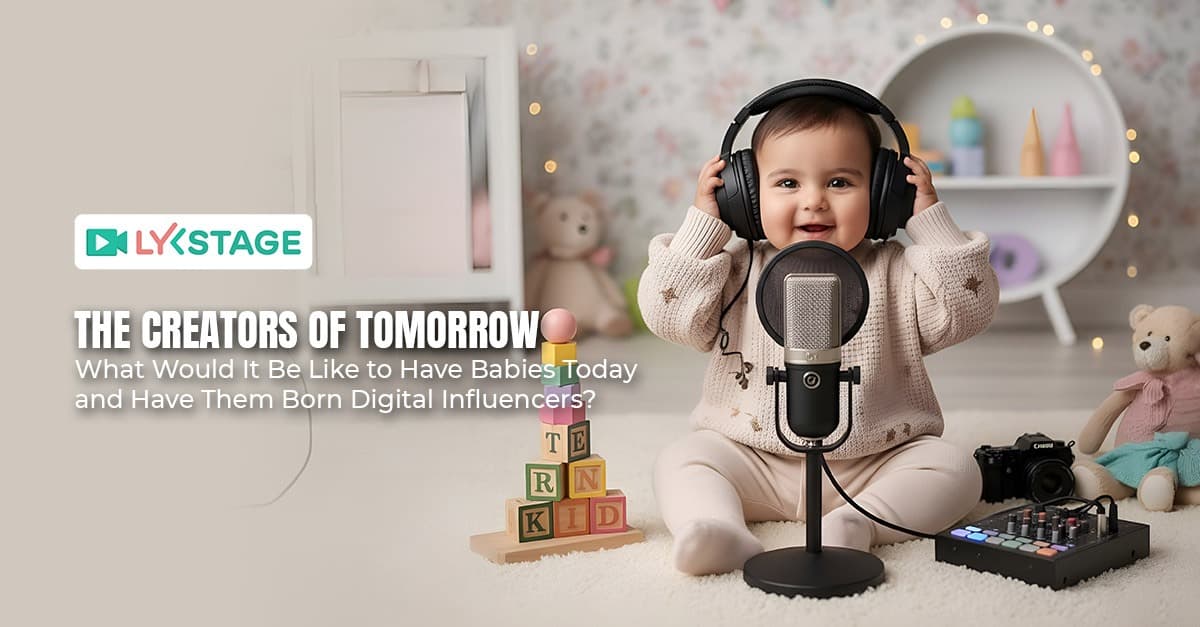
What Would It Be Like to Have Babies Today and Have Them Born Digital Influencers?
Introduction
Think of a generation being born that has their first smiles, steps, and first words recorded and aired—maybe on a video sharing platform. These are babies, literally influencers since birth, who are being exposed to digital culture before they can walk or talk.
With infant cameras growing happy and diaper bags expanding to production kits, we have to wonder: what does it mean to be an influencer before birth? This discussion examines the formation of digital identities early in life, ethical concerns, developmental issues, and how mindful platforms such as LYKSTAGE could be healthier.
1. Digital Natives From Birth
The first generation to grow up completely in the digital world is Generation Alpha, born since 2013. Almost half own tablets by the time they are 4; 25% own personal phones by the time they are 8. On social media such as YouTube and TikTok, they consume content almost as fast as they can watch and listen, spending hours a day on these sites.
This early exposure creates familiarity—but also a sense of identity based on likes, views, and trends. Other toddlers are already imitating those they observe on the internet, regardless of their inability to comprehend the actions they are watching.
2. Sharenting and Kidfluencers
Kidfluencers, children under the age of 18 who are developed into content stars, have become a mass phenomenon. Parents, with little to no regulation advice, filter the online presence of their kids regarding views, advertising, and sponsorships.
The sharing of child content by parents—known as sharenting—is everywhere. Research indicates that almost 92 percent of two-year-olds already have an online presence, and thousands of images are shared by many parents before early adolescence.
3. Ethical Concerns and Risks
Privacy and Online Presence
The babies being born now might have huge digital records that they did not agree to. These can carry shared memories—both valuable and mundane—into adulthood, influencing future opportunities and privacy.
Exploitation vs. Identity
Kidfluencers exist in grey morality. Some are forced to be sources of income, losing their anonymity and childhood privileges. In the worst situations, content may be detrimental to mental health and personal safety.
Parasocial Bonds and Influence
Children develop one-sided emotional connections with influencers—whom they may trust as much as they do their family—making them susceptible to marketing manipulation.
4. Developmental Impacts
Shaping Identity Too Soon
Studies indicate that aspects of identity and self-image are developed before adolescence—and parents play a major role in the process, digitally.
Psychological and Social Concerns
Growing up as a performer may lead to anxiety, lowered self-esteem, or a misunderstanding of self-reflection versus performative validation—particularly when the inner self is sold to content.
5. Toward Ethical and Healthy Solutions
Guiding with Intent
Parents need to evaluate whether online content produced with or about their children is consistent with long-term well-being, rather than temporary benefits in engagement.
Tighter Rules and Guarantees
In certain jurisdictions, part of earnings must now be deposited in trust on behalf of child creators.Legal protections like GDPR and COPPA provide guidance, but child-specific digital safeguards are still needed across every major video sharing platform.
Platform Responsibility
Social media should allow sharing of responsible content. An example such as LYKSTAGE focuses on quality, consent, and curated discovery instead of algorithmic exploitation—providing families with an alternative to mainstream video sharing platforms that do not always protect the youngest audience.
6. An Appeal to Conscious Digital Parenting
There is nothing bad about being born into the digital world. It can bring families together, maintain memories, and facilitate social bonding when done in a considered way—without commercialization—where special, meaningful moments are shared.Yet it is the responsibility of both parents and platforms. It is essential to promote independence, think before posting, reduce recognizable information, and promote digital literacy. Examples of how technology can put the dignity and safety of children first over clicks include platforms such as LYKSTAGE.
Conclusion
The concept of babies born today becoming influencers might no longer be a hypothetical—it is quickly becoming a reality. Though this is our digital progression, it is also a wake-up call in terms of ethics and development.We require a technology ecosystem that safeguards childhood: one that appreciates video sharing platforms built with integrity, platforms that promote thoughtful sharing rather than sensationalism.The makers of the future are not just entitled to be looked at—but to agency, privacy, and to be undigitized until they can establish themselves to define themselves on their own terms.